AI Interior Design Prompts: Reimagine Any Room With Midjourney and Nano Banana 2
A working playbook for generating magazine-grade interior design renders — copy-paste prompts for Midjourney V7 and Nano Banana 2, style cheat-sheets for Japandi, Scandi, mid-century and dark academia, lighting recipes, and the AI tells that ruin a render in two seconds.
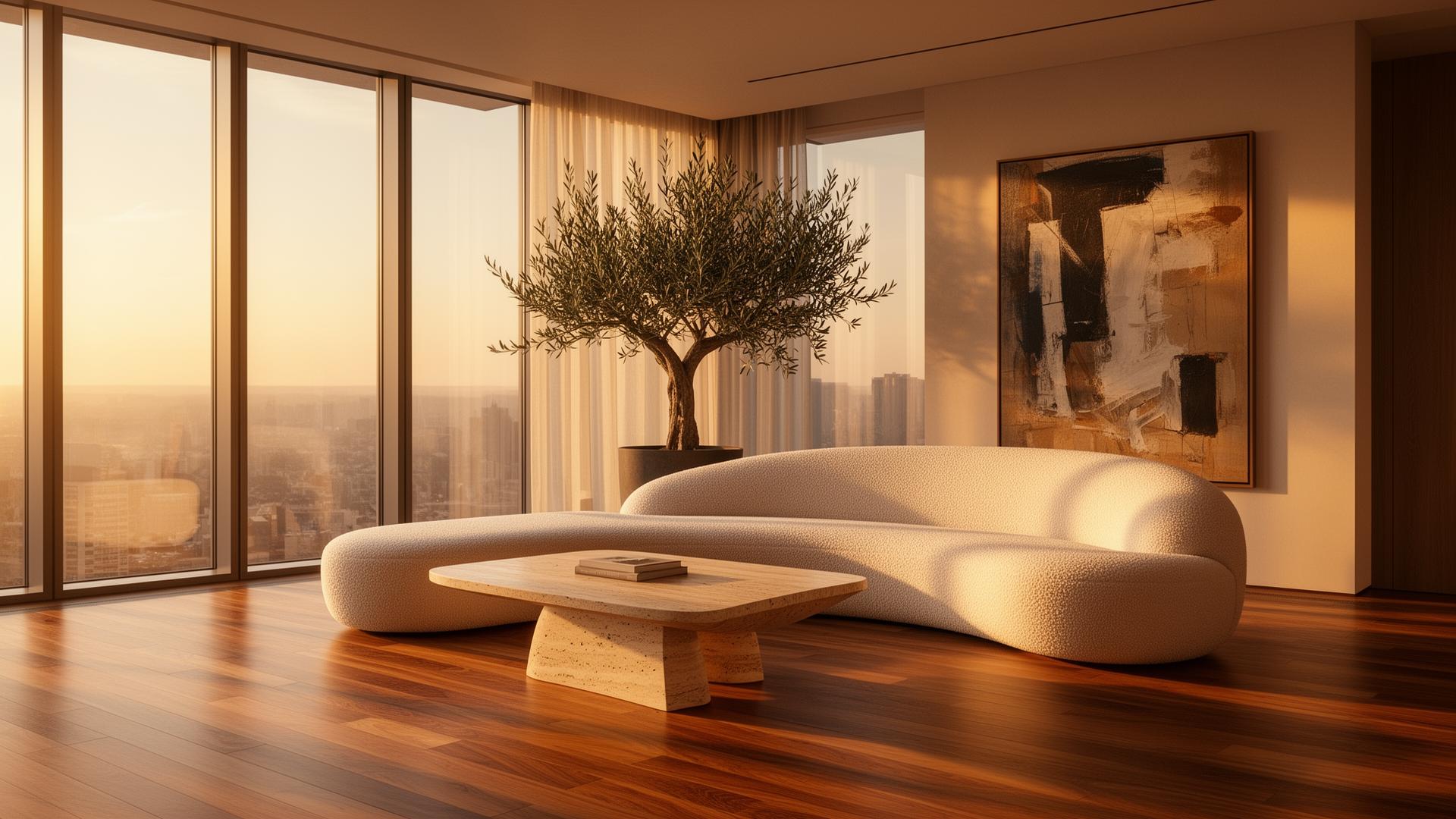
Table of contents
- Why most AI interior design prompts fail
- The six-part prompt skeleton
- Why this order matters
- A vocabulary cheat-sheet for design styles
- Japandi
- Scandinavian / Nordic
- Mid-century modern
- Dark academia / moody library
- Organic modern
- Industrial loft
- Maximalist / Soho House
- Lighting: the single biggest upgrade
- Lighting prompt fragments that work
- Camera and lens vocabulary
- Copy-paste templates by room
- Living room — organic modern
- Bedroom — Japandi
- Kitchen — moody Scandinavian
- Home office — dark academia
- Bathroom — spa minimalist
- Dining room — mid-century modern
- Midjourney V7 vs Nano Banana 2: which to use when
- Midjourney V7
- Nano Banana 2 (Gemini 3 Image)
- The dead giveaways: how to spot an AI interior
- Impossible geometry
- Books that aren't books
- Repeating patterns
- The hovering rug
- Dead plants that look alive
- Light without a source
- Texture mush
- Workflow: from idea to client-ready render in ten minutes
- Three workflows that change the game
- 1. Real-estate listing renders
- 2. Pre-renovation moodboards
- 3. Client presentations for designers
- A note on ethics and IP
- What's coming next
Interior design used to be a slow conversation. You'd flip through Architectural Digest, screenshot a Pinterest board, sketch a mood, brief a designer, wait two weeks for renders, then start the back-and-forth. In 2026, that loop collapses to about forty seconds — if you know how to prompt.
I've spent the last year using Midjourney V7 and Nano Banana 2 to design real rooms — for clients, for my own apartment, and for a small architecture studio that uses AI renders to sell concepts before a single wall comes down. The difference between a render that closes a project and one that looks like a Sims screenshot isn't the model. It's the prompt.
This guide is the working playbook. You'll get a six-part prompt skeleton, copy-paste templates for the styles people actually search for (Japandi, Scandi, mid-century modern, dark academia, organic modern, industrial loft), the lighting vocabulary borrowed from interior photographers, model-specific tricks for Midjourney V7 and Nano Banana 2, and the dead giveaways that mark a render as AI in under two seconds.
Why most AI interior design prompts fail
Most prompts you see on Reddit or TikTok read like this: "modern living room, beautiful, cozy, 4k, realistic." The model has no idea what modern means to you, no idea what cozy looks like in your culture, no idea whether you want a Soho House lounge or an IKEA showroom. So it averages. And averaged interiors look exactly like what you'd expect — generic, slightly off, lit like a dentist's office.
A render that feels like a real space — like something a photographer was paid to shoot for Dezeen — needs six things, in this order:
- Room type and architecture — what the room is, and what its bones look like.
- Design style — the named aesthetic that pins down 80% of decisions.
- Materials and palette — the specific finishes, woods, stones, metals, textiles.
- Hero pieces — two or three signature objects that anchor the space.
- Lighting — time of day, source, quality, temperature.
- Camera and rendering style — focal length, angle, and the photographic reference.
Miss any one of these and the render goes flat. Hit all six and you can sell the result to a client.
The six-part prompt skeleton
Here's the skeleton I use every single time. Fill in the brackets and ship it.
[Room type] in [architectural style], [design style], featuring [material 1], [material 2] and [material 3], [hero piece 1] and [hero piece 2], [lighting description], [camera description], [photographic reference], ultra detailed, magazine editorial photography
A worked example for a Japandi bedroom:
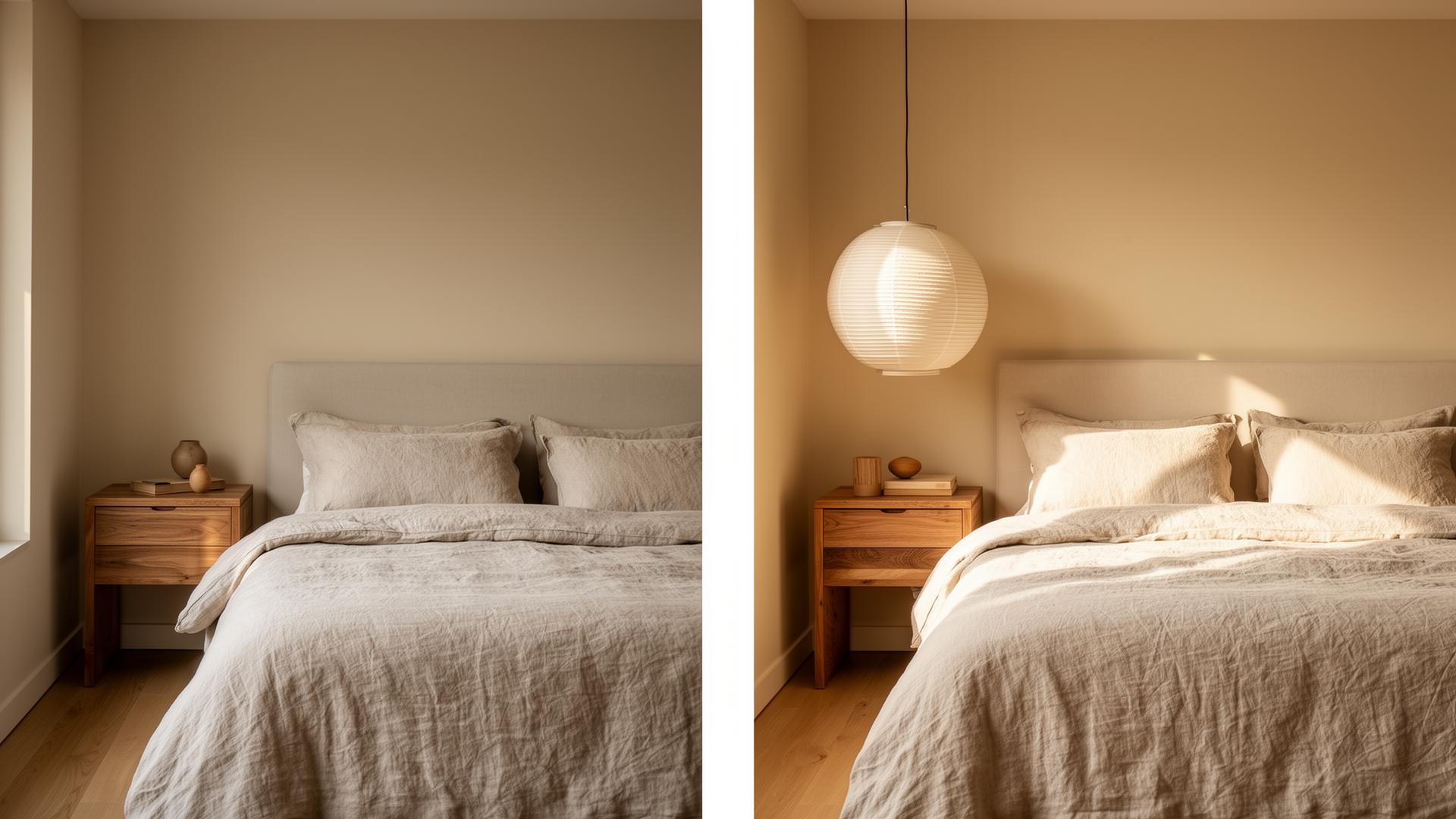
A primary bedroom in a 1920s Brooklyn brownstone, Japandi style, featuring warm white oak flooring, washed linen textiles in oatmeal and ecru, and a low travertine bench at the foot of the bed, a hand-thrown ceramic pendant lamp and a single dried branch in a tall stoneware vase, soft morning light filtering through paper shoji screens, low-angle 24mm shot from the doorway, Kinfolk editorial photography, ultra detailed, shallow depth of field
Run that through Midjourney V7 and you'll get a render that wouldn't look out of place on a real design studio's portfolio. Strip out any one component and the result regresses immediately.
Why this order matters
The early tokens in a prompt carry more weight than the late ones — in both Midjourney and Nano Banana 2. Lead with the room and style; finish with the camera and reference. If you bury Japandi at the end of a long prompt, the model treats it as a suggestion. If you lead with it, it becomes the spine.
Tip: Use commas, not periods. Image models parse comma-separated phrases as parallel descriptors. Periods sometimes get interpreted as the end of a thought and weaken everything after them.
A vocabulary cheat-sheet for design styles
Most people prompt the style they think they want, but use the wrong name. Here's the shortlist that actually triggers the right visual library inside the model.
Japandi
Hybrid of Japanese minimalism and Scandinavian warmth. Triggers: warm white oak, washed linen, oatmeal palette, hand-thrown ceramics, paper lanterns, low furniture, dried branches, wabi-sabi imperfection.
Scandinavian / Nordic
Bright, light woods, functional minimalism with a hit of cosiness. Triggers: birch and ash, white walls, sheepskin throws, matte black accents, hygge candlelight, large windows, snow outside.
Mid-century modern
Atomic-age silhouettes, walnut and teak, jewel tones. Triggers: walnut credenza, tapered legs, mustard velvet, burnt orange, brass sputnik chandelier, Eames lounge chair, terrazzo floor.
Dark academia / moody library
Saturated, scholarly, romantic. Triggers: floor-to-ceiling bookshelves, oxblood leather chesterfield, deep emerald walls, brass library lamps, persian rug, fireplace ember glow, rain on the window.
Organic modern
The big 2026 trend. Curved silhouettes, natural materials, beige-on-beige. Triggers: curved bouclé sofa, travertine coffee table, plaster walls, limewash texture, sculptural floor lamp, indoor olive tree, warm neutral palette.
Industrial loft
Brooklyn / Berlin warehouse energy. Triggers: exposed brick, blackened steel beams, polished concrete floor, oversized factory windows, edison bulb pendants, raw leather sling chair, vintage rug.
Maximalist / Soho House
Layered, eclectic, slightly louche. Triggers: velvet emerald sofa, gallery wall, vintage Moroccan rug, brass bar cart, antique mirror, fringed lamp shade, library shelving, warm tungsten lighting.
Warning: Avoid stacking more than two style names in one prompt. "Japandi industrial maximalist boho" doesn't average — it muddies. Pick one anchor style, then borrow one or two specific elements from a second.
Lighting: the single biggest upgrade
Ninety percent of AI interior renders die in the lighting. Default Midjourney lighting is flat, evenly exposed, and reads as CGI. Real interior photography lives and dies by direction, time of day, and contrast.
Steal this vocabulary from working interior photographers:
- Golden hour through west-facing windows — long warm rays raking across the floor, soft shadows
- Overcast diffused daylight — what every Architectural Digest shoot actually uses; flat but luxurious
- Blue hour with practical lights on — exterior dusk, interior lamps warm and inviting
- Morning light through sheer curtains — soft, slightly hazy, white-balanced cool
- Single-source tungsten — moody, restaurant-grade, deep shadows
- Mixed temperature lighting — warm interior lamps plus cool daylight; reads as real because real life is mixed
Drop one of these into the lighting slot of the skeleton and the render snaps into believability.
Lighting prompt fragments that work
- ...golden hour light raking across warm oak floors, long cast shadows, late afternoon...
- ...overcast diffused daylight from a large north-facing window, soft shadows, editorial...
- ...blue hour outside, interior table lamps glowing warm tungsten, mixed temperature...
- ...single brass picture light on a painting above the sofa, otherwise dim, cinematic chiaroscuro...
Camera and lens vocabulary
The other half of the believability problem is camera. Models default to a vague middle distance that flattens the space. Tell it what you want.
- 24mm wide-angle, low angle from the doorway — the standard real estate / editorial shot
- 35mm at eye level — natural, conversational, the way you actually see a room
- 50mm, slight angle to a corner detail — magazine inset shot
- Top-down flat lay — for surfaces, not rooms
- Two-point perspective from a corner — architectural, formal, brochure-grade
Add depth-of-field cues where they help: shallow depth of field for cosy and intimate, deep focus for architectural showcase renders.
Copy-paste templates by room
Here are the templates I keep saved. Replace the bracketed bits to match the brief.
Living room — organic modern
A spacious living room in a sun-drenched Mediterranean villa, organic modern style, limewashed plaster walls in warm bone, wide-plank oak flooring, and a curved cream bouclé sofa, sculptural travertine coffee table and a six-foot indoor olive tree by the window, late afternoon golden hour light, low 24mm shot from the entryway, Architectural Digest editorial photography, ultra detailed, shallow depth of field
Bedroom — Japandi
A serene primary bedroom in a minimalist Kyoto-style townhouse, Japandi aesthetic, tatami flooring with warm oak accents, washed linen bedding in oatmeal and ecru, a low platform bed with a single washi paper pendant overhead, soft diffused morning light through shoji screens, 35mm eye-level shot, Kinfolk magazine photography, calm and uncluttered, ultra detailed
Kitchen — moody Scandinavian
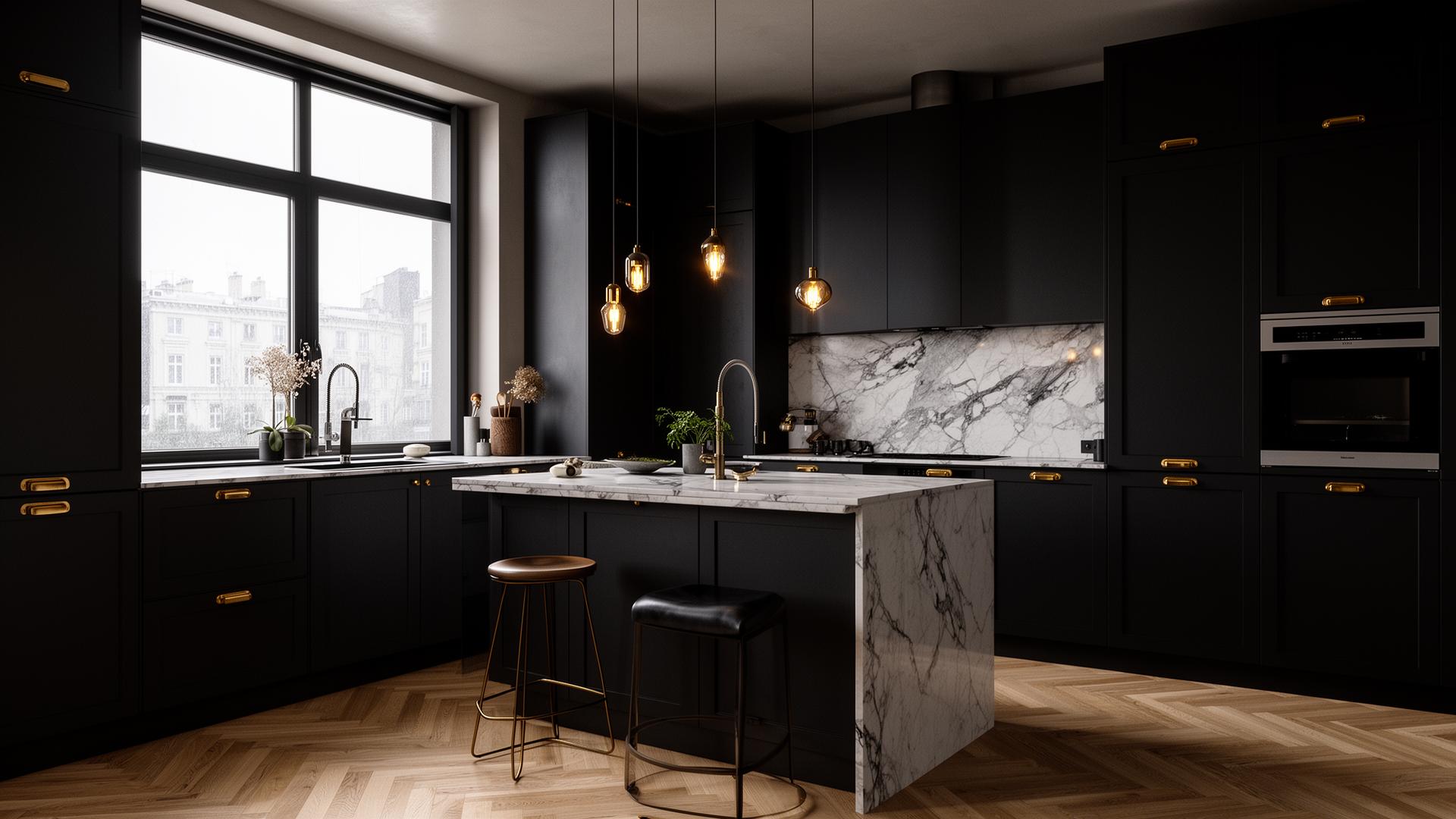
A modern kitchen in a renovated 1890s Stockholm apartment, dark Scandinavian style, matte black shaker cabinetry with brushed brass hardware, Carrara marble island with dramatic veining, herringbone oak parquet floor, three brass pendant lights with warm edison bulbs over the island, overcast diffused daylight from a tall steel-framed window, two-point perspective from the corner, ELLE Decoration editorial photography, ultra detailed
Home office — dark academia
A scholarly home office in a Georgian townhouse library, dark academia style, floor-to-ceiling walnut bookshelves filled with leather-bound books, oxblood chesterfield reading chair, antique brass desk lamp casting a warm pool of light, deep emerald painted ceiling, persian rug, rain on the leaded windows outside, single-source tungsten light, cinematic chiaroscuro, 35mm shot from the doorway, moody and atmospheric, ultra detailed
Bathroom — spa minimalist
A spa-style primary bathroom in a contemporary Californian home, minimalist organic style, large-format travertine tiles on floor and walls, a freestanding stone soaking tub by a floor-to-ceiling window overlooking a private garden, brushed nickel fixtures, single eucalyptus branch in a ceramic vase, soft morning light filtering through linen curtains, 24mm low-angle shot, Dwell magazine photography, ultra detailed
Dining room — mid-century modern
A mid-century modern dining room in a 1960s Palm Springs house, walnut sputnik chandelier with brass arms over an oval walnut dining table, six tan leather Eames-style chairs, terrazzo flooring, a sideboard with tapered legs and a large abstract painting above, late afternoon sun raking across the table, 35mm shot from the entrance, Apartment Therapy editorial photography, warm and inviting, ultra detailed
Midjourney V7 vs Nano Banana 2: which to use when
Both models can produce magazine-grade interiors. They have different strengths.
Midjourney V7
- Better at: dramatic lighting, atmospheric mood, painterly textures, dark-academia and cinematic styles, hero shots for moodboards.
- Weaker at: photographic realism in flat overcast lighting, exact furniture references, geometric accuracy in cabinetry and tile.
- Use these parameters:
--ar 16:9 --style raw --stylize 250. Drop--stylizeto 100 for more photographic results, push to 500 for more painterly. - Reference images: Use
--srefwith a Pinterest screenshot of a real interior to lock the palette and mood.
Nano Banana 2 (Gemini 3 Image)
- Better at: clean photographic realism, architectural accuracy, editing existing photos of your actual room, swapping materials and finishes on a real photo, generating consistent series across a whole apartment.
- Weaker at: stylised painterly looks, deep moody chiaroscuro.
- Killer feature: upload a phone snap of your real room with the prompt "redesign in Japandi style, keep the same architecture and window placement" and it preserves the bones while changing everything else. This is the single most useful AI workflow for actual homeowners and renters in 2026.
Tip: For client work, generate the moodboard in Midjourney V7 (because it sells the feeling), then re-shoot the same composition in Nano Banana 2 (because it sells the reality). Show both.
The dead giveaways: how to spot an AI interior
Trained eyes — real estate agents, designers, photographers — spot AI interiors instantly. Here's what to look for and how to fix each one.
Impossible geometry
Doors that lead nowhere. Stair railings that don't connect. Window frames with mitered corners that bend. Fix: Add "architecturally accurate, real-world construction, photoreal geometry" to the prompt. In Midjourney, lower --stylize.
Books that aren't books
Bookshelves full of vaguely book-shaped objects with smeared spines. Fix: Either crop them out of frame, or add "empty bookshelves with decorative objects" and avoid books entirely. Or use Nano Banana 2's edit mode to inpaint real titles.
Repeating patterns
Two identical chairs that are too identical. A row of pendants where every bulb is the same molecule of light. Fix: Add "slight natural variation" or describe specific differences: "three pendant lights of varying heights."
The hovering rug
Rugs that float a centimeter off the floor. Furniture legs that don't quite touch. Fix: Add "furniture grounded on the floor, contact shadows, weight."
Dead plants that look alive
Plants with too many leaves, in unnatural arrangements, often inside opaque pots that couldn't possibly support them. Fix: Specify the exact plant — "a single fiddle leaf fig", "a six-foot olive tree in a terracotta pot" — instead of vague "plants."
Light without a source
A wall is bright. There's no window, no lamp, no logical reason. Fix: Always name the light source in the prompt: "warm afternoon sun through the west-facing window" or "single brass picture light above the sofa."
Texture mush
The carpet looks like it's made of clay. The throw blanket has no fibres. Fix: Name the material and its texture: "chunky knit wool throw blanket", "high-pile sheepskin rug", "raw linen with visible weave."
Workflow: from idea to client-ready render in ten minutes
This is the loop I run for actual paid projects.
- Brief in plain English (1 minute). Write three sentences describing the space, the feeling, and the must-have elements. Don't worry about prompt syntax yet.
- Style anchor (1 minute). Pick one design style from the cheat-sheet above. Pin down the era and reference magazine.
- Build the prompt (2 minutes). Use the six-part skeleton. Lead with room and style, finish with camera and reference.
- Generate four variants (1 minute) in Midjourney V7 with
--ar 16:9 --style raw. Pick the strongest composition. - Refine with re-rolls (3 minutes). Adjust one variable at a time — change the lighting, swap a material, change the camera angle. Don't rewrite the whole prompt.
- Polish in Nano Banana 2 (2 minutes). Upload the chosen render and use edit mode to fix any specific giveaway — swap the dead-plant for a real one, fix the impossible bookshelf, repaint a wall.
That's it. A presentation-grade render in the time it used to take to email a designer asking when the first draft would be ready.
If you want a head start on the prompt itself, the PromptMint AI Prompt Generator can take a one-sentence brief like "cozy Scandinavian reading nook in a small London flat" and expand it into a full six-part scene before you ever open Midjourney.
Three workflows that change the game
1. Real-estate listing renders
Photograph your empty (or messy) apartment. Upload to Nano Banana 2 with the prompt "virtually stage this room in organic modern style, keep all architecture and windows identical, add furniture and decor." You get five staging options for under a dollar. Estate agents in London and Berlin are already doing this at scale.
2. Pre-renovation moodboards
Before you commit to ripping out a kitchen, generate ten versions of what it could become. Show your partner. Show your contractor. Argue before the demo day, not after.
3. Client presentations for designers
Generate three distinct directions for the same brief — Japandi, organic modern, dark academia — and let the client choose. The conversation that used to take three meetings happens in one.
A note on ethics and IP
A few rules that have already gotten people into trouble.
- Don't pass off AI renders as photos of real, finished projects. If you're a designer or contractor, label them as concept renders. Trade bodies are starting to flag this.
- Don't generate copies of identifiable real designers' work. "In the style of Kelly Wearstler" is fine as a private exploration; published commercially it's a problem.
- Don't use AI renders in real-estate listings without disclosure. Several US states now require it. The UK and EU are following.
The technology is neutral. How you label its output is not.
What's coming next
Two things are about to change the workflow again.
Video walkthroughs from a single render. Sora 2 and Veo 3 can now take a still interior render and produce a smooth, photo-real walkthrough video of the same space. Combine that with Nano Banana 2's edit mode and you can generate a styled video tour of a room that doesn't exist yet.
3D-aware models. The next generation of image models will hold geometry consistent across views — meaning you'll be able to prompt the same room from multiple angles and have the furniture, windows and doors line up. We're not quite there yet, but every release moves closer.
For now, the prompt-first workflow described above is the most powerful one available. Save the skeleton, save the style cheat-sheet, save the lighting fragments. Pair them with the right model for the job. You'll out-render most actual rendering studios — at roughly 0.1% of the cost.
If you want to go deeper on the photographic side, our AI product photography guide covers the same lighting and camera principles in more detail. For people-in-spaces work, the AI headshot playbook shows how to keep humans believable in a scene.
Design well.
Frequently asked questions
What is the best AI for interior design prompts in 2026?+
Midjourney V7 produces the most atmospheric and editorial-feeling renders, while Nano Banana 2 (Google Gemini 3 Image) wins on photographic realism and the ability to edit photos of real rooms. For client moodboards, use Midjourney V7. For staging real spaces or making precise material swaps, use Nano Banana 2. Most professionals use both.
How do I write an interior design prompt that doesn't look AI-generated?+
Use the six-part skeleton: room type and architecture, design style, materials and palette, two or three hero pieces, lighting description, and camera and rendering style. Lead with the room and style, finish with the camera. Always name a light source and reference a specific design magazine like Architectural Digest or Kinfolk to anchor the photographic style.
Can AI redesign a photo of my actual room?+
Yes — Nano Banana 2 is purpose-built for this. Upload a phone photo of your room and prompt 'redesign in [style], keep the same architecture, windows and doors.' The model preserves the geometry while changing finishes, furniture and decor. This is the most useful workflow for homeowners and renters who want to see options before spending money.
What are the biggest mistakes in AI interior design renders?+
The six dead giveaways are: impossible geometry (doors and stairs that don't make sense), books with smeared spines, repeating patterns in furniture, floating rugs and furniture without contact shadows, plants in unnatural arrangements, and light without a visible source. Fix each by being explicit in the prompt about geometry, materials, contact shadows, specific plants, and named light sources.
Is it legal to use AI interior renders in real estate listings?+
Rules vary by jurisdiction. Several US states now require explicit disclosure that an image is AI-generated or virtually staged. The UK and EU are introducing similar rules. Always label AI renders clearly as 'concept render' or 'virtual staging' rather than presenting them as photos of the actual finished space.
What Midjourney parameters work best for interior design?+
Start with --ar 16:9 --style raw --stylize 250. Lower --stylize to 100 for more photographic realism, push to 500 for more painterly mood. Use --sref with a screenshot from Pinterest or a design magazine to lock the colour palette and lighting style of the reference image.