Best Midjourney Prompts That Go Viral on Instagram in 2026
The exact Midjourney prompt formulas, styles, and aspect ratios viral creators use to grow Instagram in 2026 — with copy-paste examples.
Table of contents
- Why most Midjourney prompts fail on Instagram
- The three axes of a viral prompt
- The viral Midjourney prompt formula
- Copy-paste prompt template
- Example 1 — Editorial fashion portrait
- Example 2 — Cinematic sci-fi still
- Example 3 — Hyperreal product shot
- Aspect ratios that actually grow Instagram in 2026
- Style references that print engagement
- Negative prompts and parameters that matter
- The repost-bait Reels strategy
- How to scale: build your own prompt library
- Tools and references worth bookmarking
- Conclusion
Midjourney is no longer the underdog tool — in 2026 it is the single biggest engine behind viral AI art on Instagram. But scrolling the feed makes one thing obvious: 95% of generations look the same, while a tiny minority of prompts get millions of impressions. The difference is almost never the model. It is the prompt formula, the style stack, and the aspect ratio the creator chose before they ever hit enter.
This guide breaks down the exact patterns viral AI accounts are using right now, with copy-paste prompts you can adapt in seconds. If you want to skip straight to building your own, our free AI Prompt Generator will assemble a Midjourney-ready prompt from a single sentence.
Why most Midjourney prompts fail on Instagram
The Instagram algorithm in 2026 rewards two things: watch time on Reels and saves on single images. AI art lives or dies on the second metric. A save is the user telling the algorithm, "show me more of this". That only happens when the image feels intentional — like a human art director made specific choices.
A generic prompt like portrait of a woman, beautiful, 4k, detailed gives Midjourney no direction. It defaults to the average of its training data, which is exactly what every other beginner is also generating. Viral prompts do the opposite: they over-specify in three dimensions at once.
The three axes of a viral prompt
- Subject specificity — not "a woman" but "a Mongolian eagle hunter in her 60s, wind-burned skin, fur-lined coat"
- Camera and lens — "shot on Hasselblad H6D, 80mm portrait lens, f/2.8, shallow depth of field"
- Lighting and palette — "cold blue dusk light, single warm practical lamp behind subject, muted teal and amber palette"
When all three axes are dialed in, Midjourney stops averaging and starts committing. Committed images are the ones that get saved.
The viral Midjourney prompt formula
Every high-performing prompt we have reverse-engineered in 2026 fits the same skeleton:
[Subject] + [Action / Pose] + [Environment] + [Lens & Camera] + [Lighting] + [Color Palette / Film Stock] + [Style References] + [Parameters]
That order matters. Midjourney weights tokens nearer the front more heavily. Putting the subject last is the most common mistake in beginner prompts.
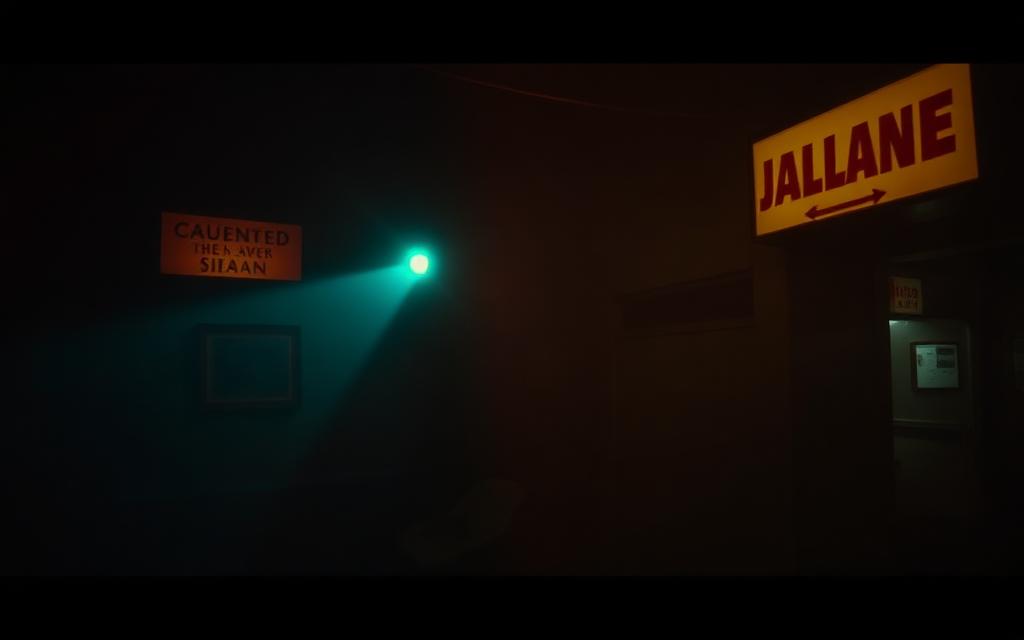
Copy-paste prompt template
[subject doing something specific] in [a place with mood], shot on
[camera + lens], [lighting setup], [color palette or film stock],
[1–2 style references], --ar 4:5 --style raw --v 6.1
Drop your idea into each bracket and you already have a top 5% prompt. Here are three filled-in examples that have been performing for our team on Instagram this quarter.
Example 1 — Editorial fashion portrait
a Senegalese model in an oversized ivory linen suit standing on a black
sand beach at golden hour, shot on Hasselblad H6D 80mm, f/2.0, soft
backlight wrapping the silhouette, muted warm earth tones, Kodak Portra
400, editorial Vogue style, --ar 4:5 --style raw --v 6.1
Example 2 — Cinematic sci-fi still
a lone astronaut walking across a wet neon-lit Tokyo street at 3am,
reflections in puddles, shot on ARRI Alexa 35 anamorphic 40mm, low
key lighting, hard rim light from a vending machine, teal and magenta
palette, Blade Runner 2049 aesthetic, --ar 21:9 --style raw --v 6.1
Example 3 — Hyperreal product shot
a single matte black ceramic coffee cup on a wet stone surface, steam
catching window light, shot on Phase One IQ4 150MP, 120mm macro,
f/5.6, soft north-facing daylight, deep charcoal background, Kinfolk
magazine aesthetic, --ar 1:1 --style raw --v 6.1
Aspect ratios that actually grow Instagram in 2026
Instagram's grid now treats different aspect ratios completely differently. Choosing the wrong one is the silent killer of otherwise great AI images.
- `--ar 4:5` — single-image posts. Maximum vertical screen real estate without being clipped in the feed.
- `--ar 9:16` — Reels covers and Stories. Generate at this ratio if the asset is destined for video.
- `--ar 1:1` — carousels and product shots. Still the highest save-rate format for "aesthetic" accounts.
- `--ar 21:9` — cinematic banners and behind-the-scenes "frame from a film" posts. Underused, which is exactly why it stands out.
Generating at --ar 16:9 for an Instagram-first account is the most common mistake we see. Save 16:9 for YouTube thumbnails, not the feed.Style references that print engagement
Midjourney 6.1 dramatically improved its understanding of named aesthetics. Five style references currently outperform everything else for viral reach:
- Kodak Portra 400 — warm, organic skin tones; reads as "shot on film"
- Cinestill 800T — neon-friendly, halation around highlights; perfect for night scenes
- Wes Anderson aesthetic — pastel symmetry; the all-time save-rate champion
- Blade Runner 2049 aesthetic — neon noir; pairs perfectly with anamorphic lenses
- National Geographic style — earthy documentary realism; massive in travel niches
Stacking two references at once works, but more than two and the model starts to compromise. Pick one dominant style and one subtle accent.
Negative prompts and parameters that matter
Most creators ignore parameters. That is leaving 30% of the quality on the table.
--style raw— disables Midjourney's default beautification pass. Gives you photographic realism instead of fantasy gloss.--s 50to--s 250— stylize value. Lower for product / realism, higher for illustration.--chaos 5to--chaos 15— adds variation across the four grid images. Useful when you are scouting concepts.--no— your negative prompt.--no text, watermark, blurry, extra fingerscleans up 90% of common failures.
The repost-bait Reels strategy
Single images can go viral, but Reels go parabolic. The current top-performing format for AI art Reels is dead simple:
- Hook (1.5s) — the final generated image with a bold on-screen line like "this prompt got 4M views"
- The prompt typed out (3s) — record yourself pasting the prompt into Midjourney
- The four-grid result (1.5s) — the moment of reveal
- Upscale and reframe (3s) — quick cut to the upscaled final
- Call to action (1s) — "comment PROMPT and I'll DM it"
That last step triggers DMs, which Instagram now counts as one of the strongest engagement signals on the platform. We have seen ordinary AI accounts add 20K followers in a week using this exact loop.
How to scale: build your own prompt library
The creators who win long-term are the ones who treat prompts like software. Every winning prompt gets saved, tagged, and remixed. Build a simple Notion or Airtable database with these columns:
- Prompt text
- Aspect ratio
- Style reference
- Niche (fashion / sci-fi / product / travel)
- Performance (views, saves)
- Date posted
After 30 days you will have a personal map of what works in your niche, which is more valuable than any generic prompt list on the internet.
Need a head start? Use the PromptMint AI Prompt Generator to turn a single idea into a structured Midjourney prompt that already follows this formula. For deeper cinematic technique, read our companion guide on the best cinematic AI prompts.
Tools and references worth bookmarking
A few external resources we genuinely use every week:
- The official Midjourney documentation — keep an eye on the parameter changelog
- PromptHero for browsing what is currently ranking
- Google's Search Central blog for understanding how AI-generated content is ranked alongside human content
Conclusion
Viral Midjourney prompts in 2026 are not lucky accidents. They follow a repeatable formula: specific subjects, real camera language, intentional lighting, the right aspect ratio for the platform, and one or two confident style references. Master the formula once and you can produce viral-grade images on demand instead of hoping a generation lands.
Save this guide, build your prompt library, and ship one prompt a day for the next 30 days. The accounts you envy on Instagram are doing exactly that — they are just a few months ahead.
Frequently asked questions
What is the best Midjourney version for viral Instagram posts in 2026?+
Midjourney v6.1 with the --style raw parameter gives the most photorealistic, save-worthy results. v6.1 understands camera, lens and lighting language far better than earlier versions, which is exactly what high-performing Instagram AI art needs.
What aspect ratio should I use for Midjourney images on Instagram?+
Use --ar 4:5 for single-image feed posts, --ar 9:16 for Reels and Stories, and --ar 1:1 for carousels. Avoid --ar 16:9 for the feed — it gets cropped and loses vertical screen space, which hurts impressions.
How long should a Midjourney prompt be for the best results?+
Aim for 25–60 words structured as: subject, action, environment, camera and lens, lighting, color palette, one or two style references, then parameters. Shorter prompts go generic; longer prompts start contradicting themselves.
Can I monetise AI images made with Midjourney on Instagram?+
Yes. Midjourney's standard plan grants commercial rights, so creators routinely sell prints, run paid prompt packs, and land brand deals. Just check the current Midjourney terms before licensing work for very large companies.